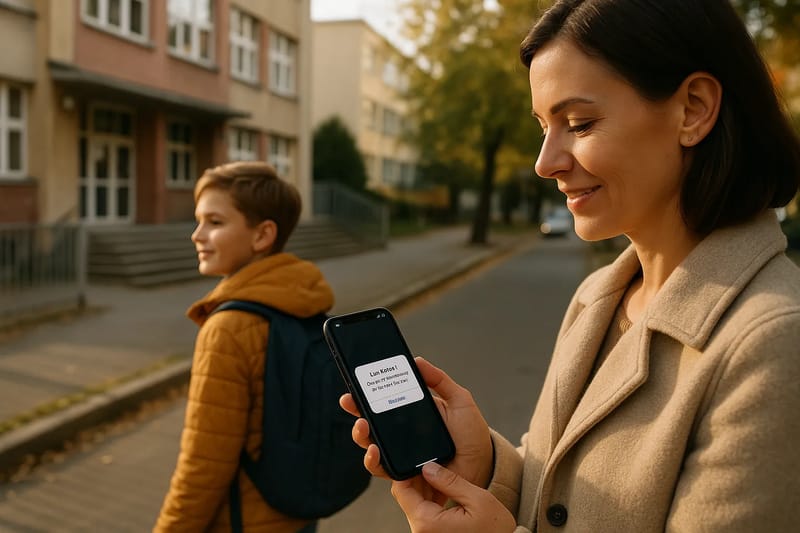
In today's world, children are increasingly using mobile devices. With the growing access to technology, smartphones have become an integral part of their daily life. However, these devices have their limitations, one of which is their reliance on battery life. Therefore, managing the battery status of a child's phone can be an important issue in terms of maintaining safety and responsibility.
Adapting devices to the lifestyle of young people is a challenge for both parents and tech developers. Low battery notifications may seem to be a mere minor feature, but their significance is substantial. Providing children with the skills to manage device energy teaches them responsibility and care for their resources. In this regard, monitoring apps can be helpful in teaching these skills.
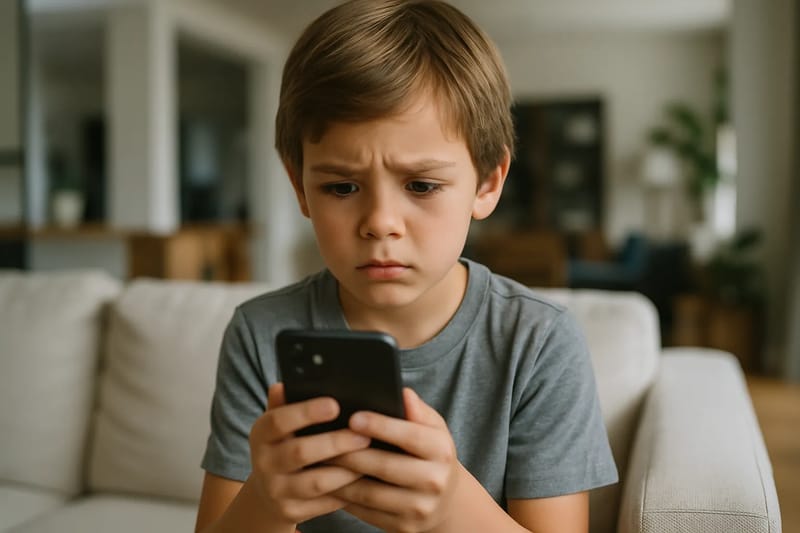
In the context of school education, mobile devices can be challenging. As UNESCO points out, a smartphone in class can distract students – even just having a phone nearby with notifications coming through draws attention away from the task, and refocusing can take up to 20 minutes. In Poland, since 1 September 2026 a ban on phone use applies in primary schools. Therefore, managing the time and availability of the phone becomes crucial to maintaining a balance between education and technology.
Low battery notifications can also be important from a safety perspective. Knowing when a child's phone is close to running out of battery allows parents to react quickly and provides an extra level of comfort in situations when the child is away from home. What to agree with your child in case the phone dies anyway, we describe in the child's phone died in town. It is not solely the MichalKids app but the general availability of this type of feature in various apps and operating systems that make parents feel more connected to their child, keeping their safety in mind.
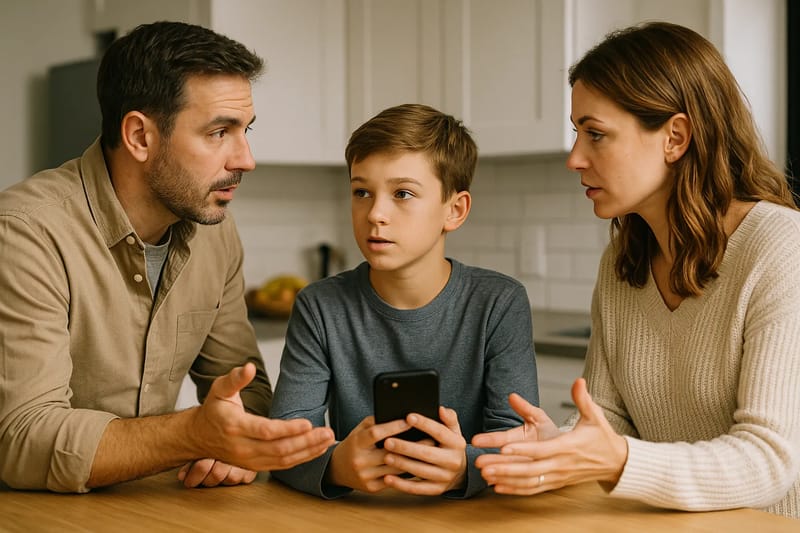
We must remember that technology should support our relationships and aid educational processes, rather than serve as the main method of control. It is important to use technological tools with moderation, as an additional support element, and not as a means of full surveillance.
Sources
- UNESCO, “To ban or not to ban? Smartphones in school only when they clearly support learning” – smartphones in class distract, the mere presence of a phone with notifications draws attention away, refocusing takes up to 20 minutes (based on the GEM Report 2023)
- Act of 3 July 2026 amending the Education Law (Journal of Laws 2026, item 1036) (in Polish) – ban on phone use in primary schools from 1.09.2026