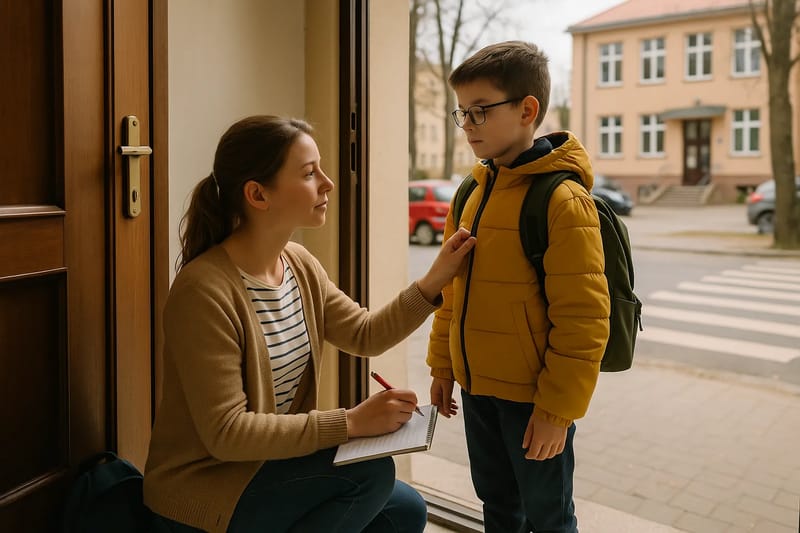
Every parent wants to ensure their child's safety, even when they are on their way to extracurricular activities. To this end, it's worth preparing appropriately by taking a few steps. Planning the route, teaching children about behaviour in dangerous situations, and utilising technology can help with this. It is crucial to act in accordance with the law and respect the child's privacy.
Planning a Safe Route
When planning a route to school or extracurricular activities, it's worth choosing the safest path. Pay attention to lighting, traffic and pedestrian crossings with traffic lights. It is also advisable for the child to travel the route with a carer until they know it by heart – under Polish law a child up to 7 may use the road only under the care of a person aged at least 10 (Article 43 of the Road Traffic Act). After dark outside built-up areas, pedestrians must wear reflective elements (Article 11(4a)). How to plan the route step by step, we describe in safe route to school, and what to do if your child deviates from it – in what to do when your child deviates from the agreed route.
Stranger Education
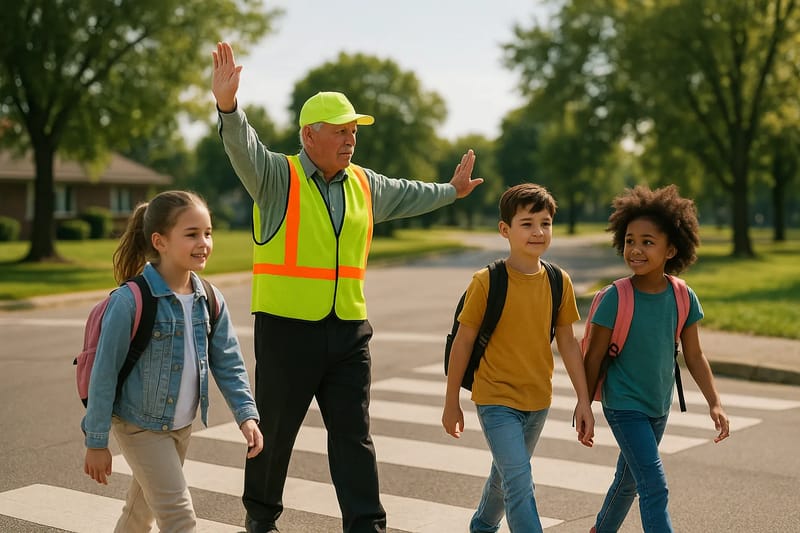
Children should be taught never to get into a stranger's car or accept gifts from strangers. Also agree on places along the way where the child can go in and ask for help (e.g. a shop or pharmacy), and that in danger they can call 112 or ask an adult to call.
Using Technology — Legal and Ethical Aspects
GPS technology allows parents to monitor their child's location. Parents make the decision, but it is worth remembering children's rights: the Convention on the Rights of the Child protects them from arbitrary interference with their privacy (Article 16) and gives them the right to express their views in matters affecting them, with due weight according to age and maturity (Article 12). A company processing location data must inform clearly about it (Article 13 GDPR) – check the app's privacy policy to see who can access the data and how long it is kept.
Consultation with the Child
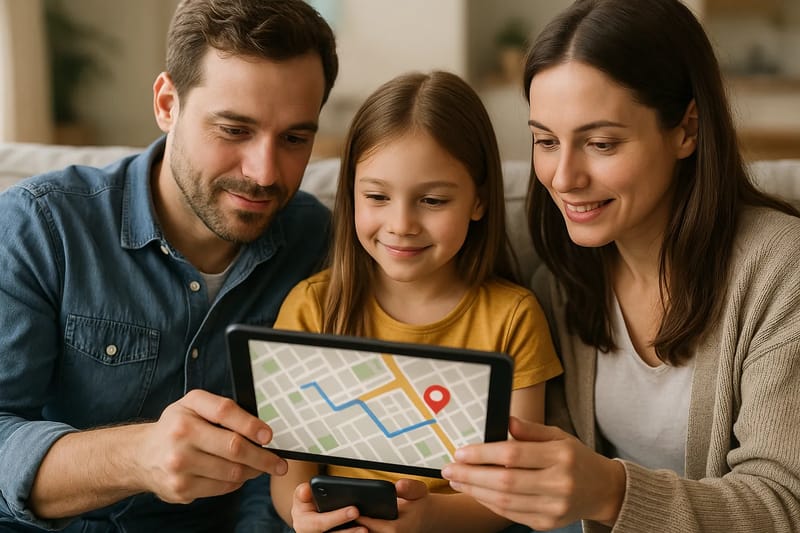
Talking with the child about using a locator is a good opportunity to emphasise their role in decision-making processes regarding their safety. It is important for the child to understand why we use such technologies and what benefits and threats they pose to their privacy – how to talk about it, we describe in how to tell your child that you can see their location.
Where to Seek Help?
If you feel unsure about your child's safety education or the use of localisation technologies, it is advisable to consult a child psychologist or a lawyer specialising in personal data protection law. Educational programmes organised by schools and non-governmental organisations are also recommended. In crisis situations, in Poland a child can get help from the helpline for children and young people, 116 111, and a parent from 800 100 100. In an emergency, call 112.
Sources
- Road Traffic Act, consolidated text (Journal of Laws 2024, item 1251) (in Polish) – Art. 43(1) (child up to 7 under the care of a person aged at least 10), Art. 11(4a) (reflective elements)
- Convention on the Rights of the Child (Polish Journal of Laws 1991 No 120 item 526) (in Polish) – Article 12 (right to express views), Article 16 (privacy)
- Regulation (EU) 2016/679 (GDPR) – Article 13 (information obligation)
- Helplines – Fundacja Dajemy Dzieciom Siłę (in Polish) – 116 111, 800 100 100