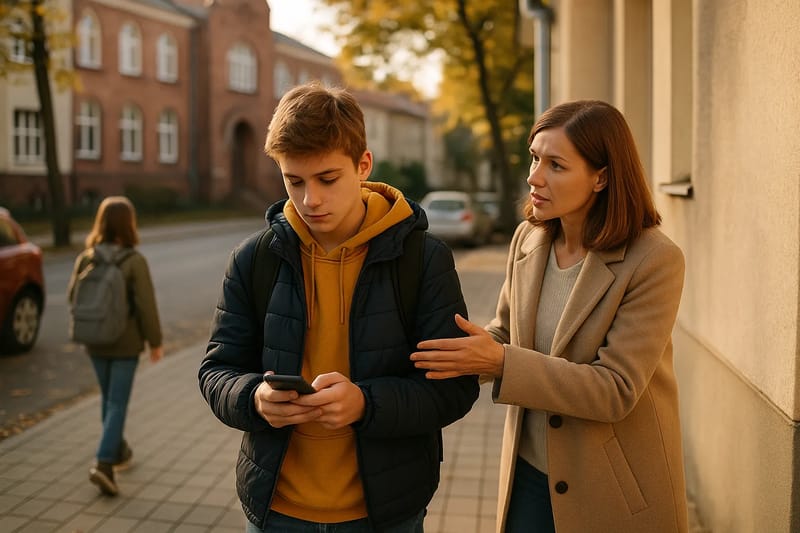
Parenting teenagers is challenging, especially in the digital age. While parental control over what children do online has many advantages, it also raises questions about the boundaries of privacy. Where does the duty of protection end, and respect for a young person's privacy begin?
Under the law, everyone, including children, has the right to the protection of their personal data. The rules are set out in the EU General Data Protection Regulation (GDPR), which in recital 38 stresses that children merit specific protection of their data, as they may be less aware of the risks. The Convention on the Rights of the Child (Article 16) states that no child shall be subjected to arbitrary or unlawful interference with his or her privacy or correspondence. Polish schools teach about privacy in computer science, among other subjects – "respecting the privacy of information" is one of the aims in the core curriculum. More about children's data in our article on children's privacy online.

The key to managing a child's online privacy lies in trust and open communication. A classic study of teenagers showed that parents know about their child's life mainly what the child tells them – not what they find out by checking and controlling (Kerr and Stattin, 2000). That is why openness about monitoring matters: how to talk about it, we describe in how to tell your child that you can see their location.
A child's right to privacy does not disappear when a parent worries – which is why a balance between protection and trust is needed. It is worth reducing the scope of supervision as the child grows and agreeing on it with the teenager, rather than introducing it quietly.
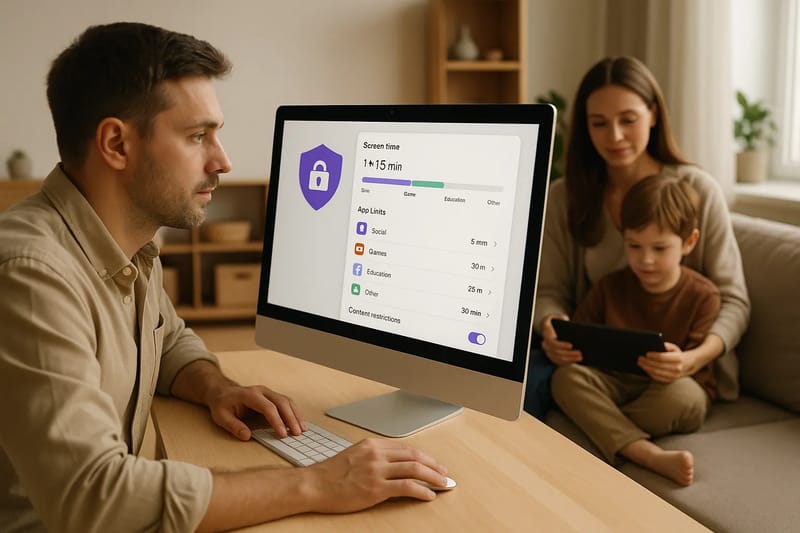
However, we cannot forget the potential dangers associated with online activity. Although GDPR and other regulations offer a certain level of protection, parents, educators, and caregivers are the first line of defence. Therefore, it is especially important to teach children how to use the internet safely and recognise threats – see our 10 rules for talking about online safety.
Sources
- Regulation (EU) 2016/679 (GDPR) – recital 38: specific protection of children's data
- Convention on the Rights of the Child (Polish Journal of Laws 1991 No 120 item 526) (in Polish) – Article 16: protection against arbitrary or unlawful interference with privacy and correspondence
- Regulation of the Minister of National Education of 14 February 2017 on the core curriculum (Journal of Laws 2017, item 356) (in Polish) – computer science: respecting the privacy of information
- Kerr M., Stattin H. (2000), Developmental Psychology 36(3), 366–380 – parents' knowledge comes mainly from the child's disclosure