
What Is a Deepfake? A Parent's Guide
What Is a Deepfake?
A deepfake is a photo, video, or audio recording that has been faked using artificial intelligence. AI can swap one person's face for another, generate a realistic voice, or create a video of an event that never happened.
The name comes from deep learning + fake.
Why Does This Concern Your Child?
Today's AI tools make it possible, in a short time, to:
- Swap a classmate's face in a TikTok video
- Generate someone's voice saying something they never said
- Create a fake photo and send it to a group chat
This isn't science fiction. That is why, since 1 September 2026, Poland's core curriculum for health education in primary school (grades 4–8) explicitly lists deepfakes, phishing and the risks of artificial intelligence, among other topics (Regulation of the Minister of Education, Journal of Laws 2026 item 958). An Internet Matters study also found that almost two-thirds of children and almost half of parents don't know or understand the term "deepfake".
Real Threats:
1. AI-Powered Cyberbullying Someone creates a deepfake of a classmate in a compromising situation and shares it across groups. The person shown doesn't know where it came from because the situation never happened. How to respond to online abuse is covered in our guide to cyberbullying.
2. Disinformation A child sees a "video" of a celebrity or teacher saying something shocking. They believe it because it looks real. They share it further.
3. Nude Deepfakes According to Internet Matters research, 13% of UK teenagers have some experience with a nude deepfake – around 4 children in a class of 30. This is a form of sexual abuse, and in Poland producing, distributing, presenting, storing or possessing pornographic material showing a generated or manipulated image of a minor engaged in sexual activity is a crime (Article 202 § 4b of the Polish Criminal Code). If your child comes across such material or is shown in it, it is not their fault – report it together (in Poland: Dyżurnet.pl) and talk calmly with your child; the 116 111 helpline for children and young people can also help.
4. Voice Scams AI calls with a parent's voice: "Quick, send me the code from that text message." The child doesn't recognize it's not a real voice.
How to Spot a Deepfake?
Teach your child to look for these signs – but warn them that newer tools leave them less and less often. The absence of "glitches" does not prove a recording is genuine; checking where it came from matters more.
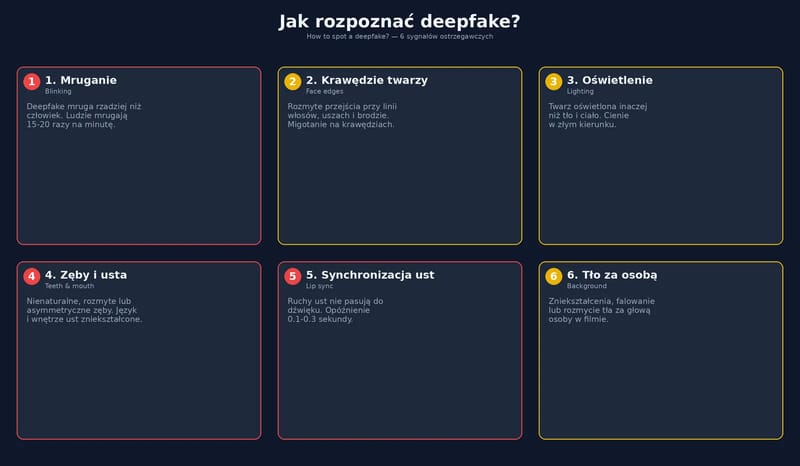
Video:
- Strange eye movements — unnatural blinks or no blinking
- Inconsistent lighting — face lit differently than background
- Blurry face edges — especially around hair and ears
- Unnatural lip movement — desynchronization with audio
- Odd ears, teeth, jewellery — small details are sometimes distorted
Audio:
- Metallic voice — slightly robotic tone
- No pauses — humans make natural breaks, AI speaks smoothly
- Lack of emotion — voice is "too perfect"
Photos:
- Too perfect — no pores, wrinkles, skin imperfections
- Distorted background — letters, signs, backgrounds appear "smeared"
- Hands — hands sometimes look unnatural (finger count, positions)
How to Talk to Your Child About Deepfakes?
It is worth starting early: Poland's data protection authority (UODO) devoted a webinar for schools in its "Your data – your business" programme (30 January 2026) to deepfakes, with practical tips on why to talk about them with children and young people.
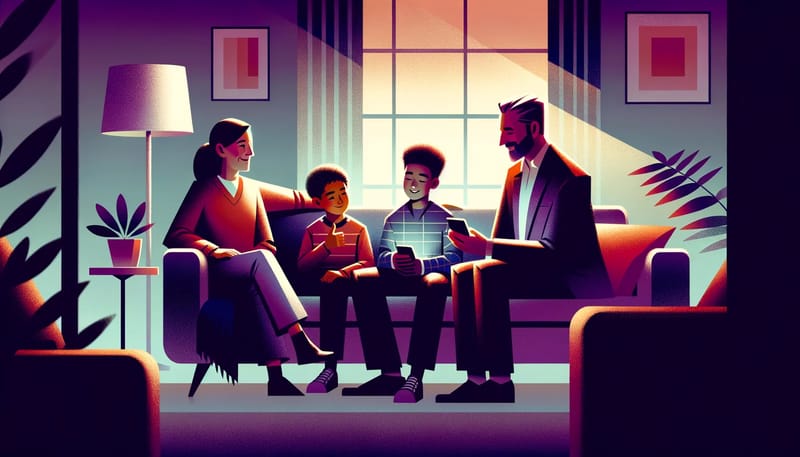
Ages 6-9:
"Not everything you see on the internet is real. There are programs that can change someone's face or voice. Always ask us if something worries you."
Ages 10-13:
"There's technology that can create fake videos. They look real, but it's artificial intelligence. Before you believe or share — check the source."
Ages 14-18:
"Deepfakes are real tools — for disinformation, cyberbullying, and scams. Sharing someone's image generally requires their consent, and pornographic material with a generated image of a child is a crime. Learn to recognize them."
5 Rules for the Family
- Verify before sharing — "Where is this video from? Who recorded it? Do other sources confirm it?"
- Second channel rule — if someone calls with "mom's voice" with an unusual request, call back on the normal number
- Don't create deepfakes of peers — it's not a "joke": under Polish law, distributing someone's image generally requires their consent (Article 81 of the Act on Copyright and Related Rights), and with sexual content showing a minor's image it is a crime
- Talk about AI — children should understand HOW it works so they're not defenseless
- Use educational tools — "true or false" quizzes, recognition exercises
What Does MichalKids Offer?
The MichalKids Academy has a course for children called "Recognizing Deepfakes" – short lessons with quizzes and a certificate once the path is completed. The Academy switches on automatically for a child aged 10 or older once their phone has been sending data to MichalKids for a day.
We teach children to recognize threats independently — instead of blocking their internet.
Guardian, not a spy. We don't protect children FROM the internet — we teach them HOW to use it.
Sources:
- Internet Matters — Children’s experiences of nude deepfakes
- Regulation of the Minister of Education of 8 July 2026 amending the core curriculum – Journal of Laws 2026 item 958 (health education, grades 4–8, in Polish)
- UODO — Deepfakes, disinformation and data protection in the age of AI – webinar (30 Jan 2026, in Polish)
- Polish Criminal Code – consolidated text, Journal of Laws 2026 item 1342 (Art. 202 § 4b, in Polish)
- Act on Copyright and Related Rights – consolidated text, Journal of Laws 2025 item 24 (Art. 81, in Polish)
- Dyżurnet.pl (NASK) – reporting harmful and illegal content
- 116 111 – helpline for children and young people